
Structural Pruning That Maintains Health and Form
Tree, Shrub & Hedge Care in Houston for overgrown plantings and safety hazards near structures
Branches growing into roof lines lift shingles and trap moisture that accelerates decay, while dense shrub interiors harbor pests and develop dead wood that weakens overall structure. Haley's Landscaping Services Inc provides routine pruning for trees, shrubs, and hedges across Houston properties, removing crossing branches that rub and create entry points for disease, thinning crowns to improve air circulation that reduces fungal pressure, and shaping hedges to maintain density without excessive height. Property owners schedule maintenance when branches obstruct walkways or windows, when storm damage leaves torn limbs hanging, or when years of neglect produce overgrown masses that obscure architectural features.
Seasonal trimming follows plant-specific timing to avoid cutting during active growth flushes or bloom cycles, with structural work performed during dormancy and light shaping done after flowering completes. Hedge maintenance uses proper techniques that encourage lateral branching rather than leaving stubs that produce weak, vertical shoots.
Contact us to schedule a maintenance evaluation for trees, shrubs, and hedges requiring structural correction or routine shaping.
What Proper Pruning Removes and Why
Pruning cuts target dead and diseased wood first to eliminate decay sources, then address crossing branches where bark abrasion creates wounds, and finally remove suckers and water sprouts that drain energy without contributing to the plant's structure. Thinning cuts open crowns to allow light penetration and air movement through the canopy, reducing humidity levels inside the foliage mass that otherwise promote fungal infections common in Houston's climate.
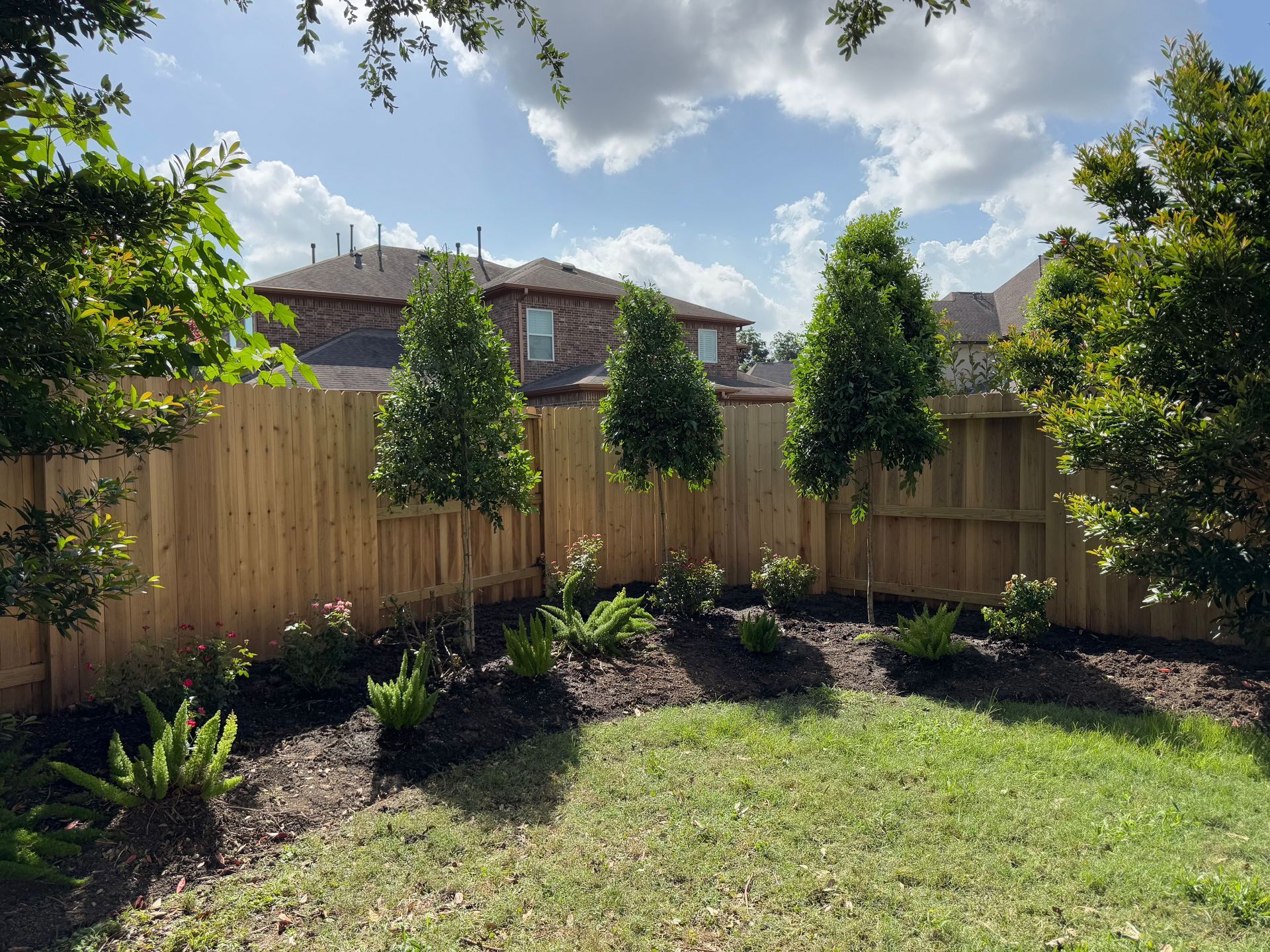
After maintenance completes, you'll notice improved sightlines from windows previously blocked by overgrown shrubs, cleared roof lines where branches no longer contact shingles, and hedges with uniform density from top to bottom rather than sparse lower sections and thick tops. Trees develop stronger branch architecture as weight redistributes away from weak crotches and overlapping limbs, reducing future storm damage risk.
Preventative maintenance identifies potential failures before branches break during wind events, addresses rubbing limbs before bark damage advances to internal decay, and maintains hedge form so plants don't require severe reduction cuts that leave bare gaps. Regular pruning cycles keep plants within intended size boundaries without the shock of heavy renovation work.
Maintenance Questions We Hear Frequently
Understanding pruning timing and technique helps property owners recognize quality work and maintain healthy landscapes between professional service visits.
What signs indicate your trees or shrubs need immediate pruning attention?
Warning signs include branches touching structures, dead wood visible in the canopy, crossing limbs that rub and damage bark, or storm-damaged sections with torn wood that requires clean removal cuts.
How does seasonal timing affect pruning outcomes for different plant types?
Spring-flowering shrubs are pruned immediately after blooms fade to avoid removing next year's flower buds, while summer bloomers are cut during dormancy, and structural tree work occurs in winter when decay organisms are less active in Houston's mild climate.
When does hedge trimming maintain shape versus requiring renovation cutting?
Regular trimming every six to eight weeks during the growing season maintains density and form, while neglected hedges that grow beyond intended size need severe reduction that temporarily leaves sparse appearance until regrowth fills in.
What distinguishes proper pruning cuts from harmful topping or stubbing?
Proper cuts remove branches at their origin point or just above a lateral bud, preserving the plant's natural form, while topping leaves large stubs that produce weak sprouts and create decay entry points.
How often should mature trees receive structural pruning to prevent hazards?
Most mature trees benefit from inspection and selective pruning every three to five years to remove dead wood, address structural defects, and maintain clearance from buildings and utilities.
Haley's Landscaping Services Inc maintains trees, shrubs, and hedges using techniques that promote healthy growth and reduce future problems. Arrange recurring maintenance to keep your landscape safe, attractive, and structurally sound throughout the year.