Foundations Protected From Water Damage
Site Prep, Rough Grading & Drainage Solutions in Houston for properties with standing water, erosion, or slope directing runoff toward structures
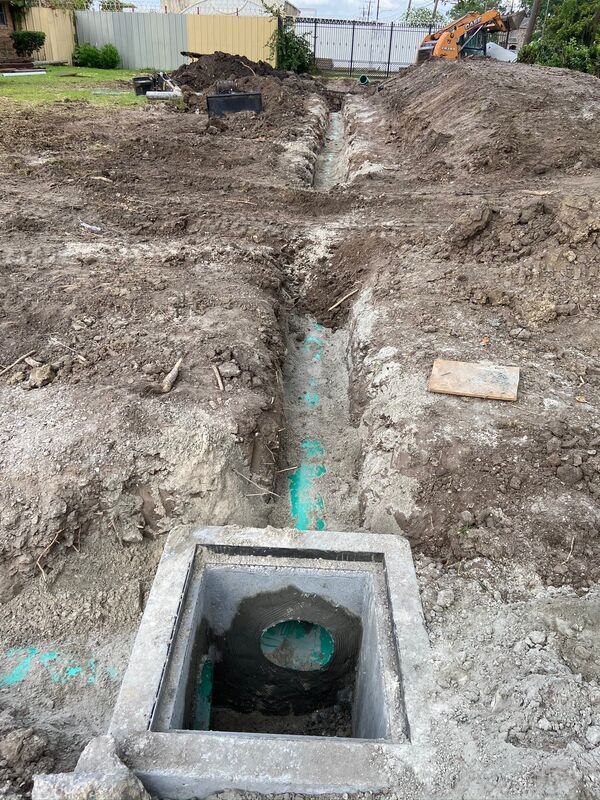
Standing water near foundations, erosion channels cutting through yards, and saturated soil that prevents plant survival all trace back to improper grading that fails to direct runoff away from structures and planting areas. Haley's Landscaping Services Inc provides grading corrections, French drain installation, surface drainage routing, downspout extensions, and erosion control for Houston properties where clay soil and heavy rain events create persistent drainage problems. Grading work reshapes the ground surface to establish positive slope away from foundations, fills low spots where water collects, and creates swales or berms that channel runoff toward appropriate discharge points.
Proper grading requires measuring existing elevations, calculating slope percentages, and determining cut-and-fill zones where soil is removed or added to achieve target grades. The goal is minimum two percent slope away from structures—enough to move water but not so steep that erosion develops. French drains intercept subsurface water before it reaches problem areas, using perforated pipe surrounded by gravel and filter fabric that allows water entry while blocking soil particles that would clog the system.
Schedule a property evaluation to identify drainage paths, measure slope conditions, and determine whether grading or subsurface drainage is needed.
How Drainage Correction Protects Property Long-Term
Surface drainage moves water across the ground using slope, while subsurface drainage captures water that infiltrates soil and routes it through buried pipe. The approach depends on soil type, rainfall intensity, and where water needs to go. Clay soil in Houston sheds water across the surface during heavy rain because infiltration is slow, making surface grading critical. Sandy soil allows faster infiltration but may still need French drains to intercept water moving below grade toward foundations or low areas.
After grading and drainage work, you notice water flows away from structures during rain rather than pooling against foundation walls, erosion stops because runoff follows controlled paths instead of cutting random channels, and previously soggy areas dry out enough to support turf or planting beds. Foundations remain stable without hydrostatic pressure from saturated soil, and basements or crawl spaces stay dry because water is intercepted before reaching the building envelope. Landscaping survives because roots aren't submerged in standing water for extended periods.
Site preparation work also establishes proper grade for future landscaping or construction projects. The process includes clearing vegetation, removing debris, rough-shaping the site, and establishing elevation benchmarks. Erosion control measures like silt fencing or temporary seeding prevent soil loss during construction, and compaction testing ensures filled areas won't settle after structures or hardscape are built on top.
What Property Owners Usually Ask
Drainage and grading questions often focus on solutions for specific problems, cost factors, and how work integrates with existing landscaping.
What causes standing water in certain areas of the yard?
Water pools where the ground surface is lower than surrounding areas, where soil is compacted and prevents infiltration, or where slope directs runoff into a zone with no outlet. Clay soil common in Houston compounds the problem by shedding water across the surface rather than absorbing it, causing even small low spots to fill during rain.
How does a French drain work compared to surface grading?
French drains capture subsurface water moving through soil and route it away through perforated pipe, while surface grading shapes the ground to direct runoff before it infiltrates. Properties often need both—grading to handle immediate runoff and French drains to intercept water that soaks in and moves laterally through soil layers.
When should drainage work be completed relative to landscaping installation?
Drainage and grading happen before planting, hardscape, or turf installation so the site is shaped correctly and water management systems are in place. Attempting to fix drainage after landscaping is installed requires disturbing plants, removing hardscape, or regrading around established features, which increases cost and disruption.
What happens to water collected by drainage systems?
Water is routed to appropriate discharge points like storm drains, drainage ditches, dry wells, or low areas away from structures. Local regulations may restrict discharge locations, requiring systems to direct water to specific collection points rather than onto adjacent properties or streets.
How is erosion controlled on sloped properties?
Erosion control includes establishing ground cover, installing retaining walls to manage steep slopes, creating terraces that reduce slope angle, and using riprap or erosion fabric in channels where water concentrates. Native grasses and deep-rooted plants stabilize soil on slopes better than shallow-rooted turf.
Haley's Landscaping Services Inc evaluates drainage problems, designs grading solutions, and installs subsurface systems that protect foundations and landscaping from water damage. Request a drainage evaluation to review site-specific concerns and discuss correction options for your property.