
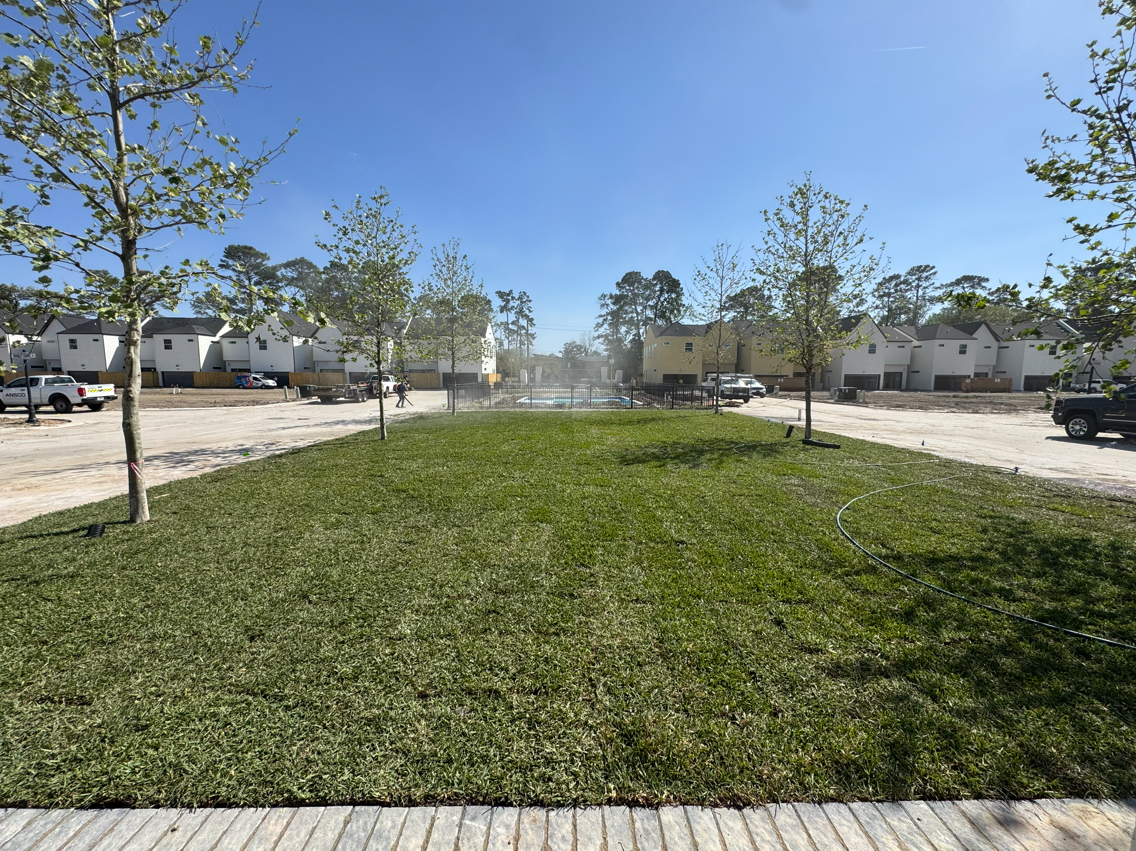
Grass That Looks Established the Same Day
Sod Installation in Houston for properties with bare patches, erosion, or construction damage
Haley's Landscaping Services Inc installs sod across Houston for properties where patchy grass, bare soil, or damaged turf creates drainage concerns or leaves yards looking unfinished. Professional sod installation replaces waiting months for seed to germinate with a mature lawn that takes root within weeks, covering problem areas that erosion has worn down or construction equipment has compacted. Houston's clay-heavy soil and intense summer heat make proper ground preparation critical, since sod laid over unprepared or poorly graded soil often develops brown spots or pulls away at seams before roots establish.
The installation process begins with removing existing damaged grass and any debris, then grading the soil to correct drainage issues that may have contributed to the original lawn failure. Fresh sod is laid in staggered seams similar to brickwork, which prevents gaps from forming as the grass settles and roots penetrate the soil below. Each piece is rolled to ensure full contact between sod roots and the prepared ground, eliminating air pockets that cause sections to dry out and die back.
Schedule a property evaluation to identify grading needs and determine how much sod your specific bare areas require.
What Happens After Sod Takes Root
Once sod is installed and rolled, the grass needs consistent watering to push roots down through the sod layer and into the native soil beneath. During Houston's growing season, new sod typically requires watering twice daily for the first two weeks, then gradually less frequent irrigation as roots anchor deeper. The soil grade established during preparation determines how water moves across the lawn, preventing pooling in low spots that can drown new roots or cause fungal issues in the humid climate.
After the sod takes root, you'll notice the seams between pieces become invisible as grass blades grow together, and the lawn feels firm underfoot rather than spongy or loose. Areas that previously collected standing water after rain now drain properly due to the grading corrections made before installation, and the fuller grass coverage prevents soil from washing away during heavy downpours. Weeds have fewer opportunities to establish because the dense sod leaves no bare soil exposed to sunlight.
The installation includes selecting sod varieties suited to your yard's sun exposure and intended use, whether that means shade-tolerant grass for areas under trees or more durable varieties for high-traffic zones near driveways and walkways. Aftercare guidance covers mowing height, watering adjustments as roots deepen, and fertilization timing to support establishment without encouraging excessive top growth before roots can support it.
What Property Owners Usually Ask
Customers in Houston often have questions about the sod installation process, particularly regarding soil preparation, watering requirements, and how quickly new grass becomes usable.
How is the soil prepared before sod is laid?
Existing grass and debris are removed, then the soil is graded to correct drainage problems and create a level surface that prevents water from pooling in low areas or rushing off slopes too quickly.
What type of sod works best for Houston's climate?
The selection depends on sun exposure and use patterns, with some varieties handling shade better and others tolerating foot traffic or heat stress more effectively during summer months.
How long before the new lawn can handle foot traffic?
Light walking is possible within two to three weeks once roots begin anchoring into the soil below, but heavy use or play should wait until roots have fully established and the grass has been mowed at least twice.
Why does new sod sometimes develop brown patches?
Brown spots typically indicate either air pockets beneath the sod preventing root contact with soil, insufficient watering during the establishment period, or drainage issues that leave sections too wet or too dry.
What does the watering schedule look like after installation?
New sod requires watering twice daily for approximately two weeks, then the frequency decreases gradually as roots grow deeper and the grass becomes more drought-tolerant, though Houston's heat may require adjustments during peak summer.
Haley's Landscaping Services Inc provides specific aftercare instructions based on your soil conditions and the sod variety installed. Request an estimate to address bare areas, erosion problems, or complete lawn renovations with professional sod installation.